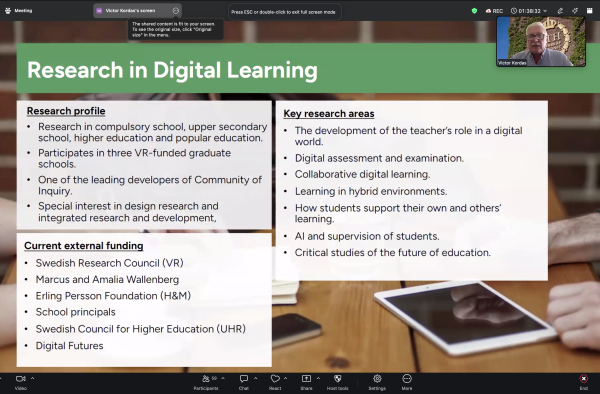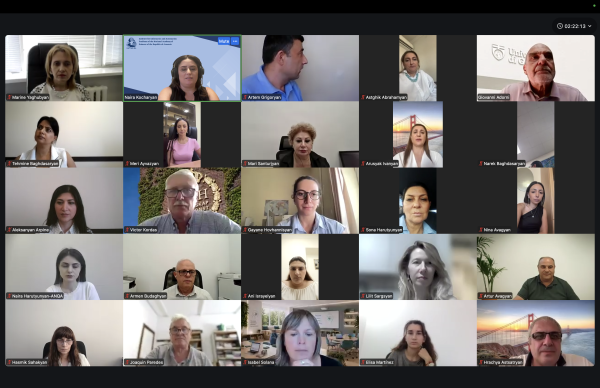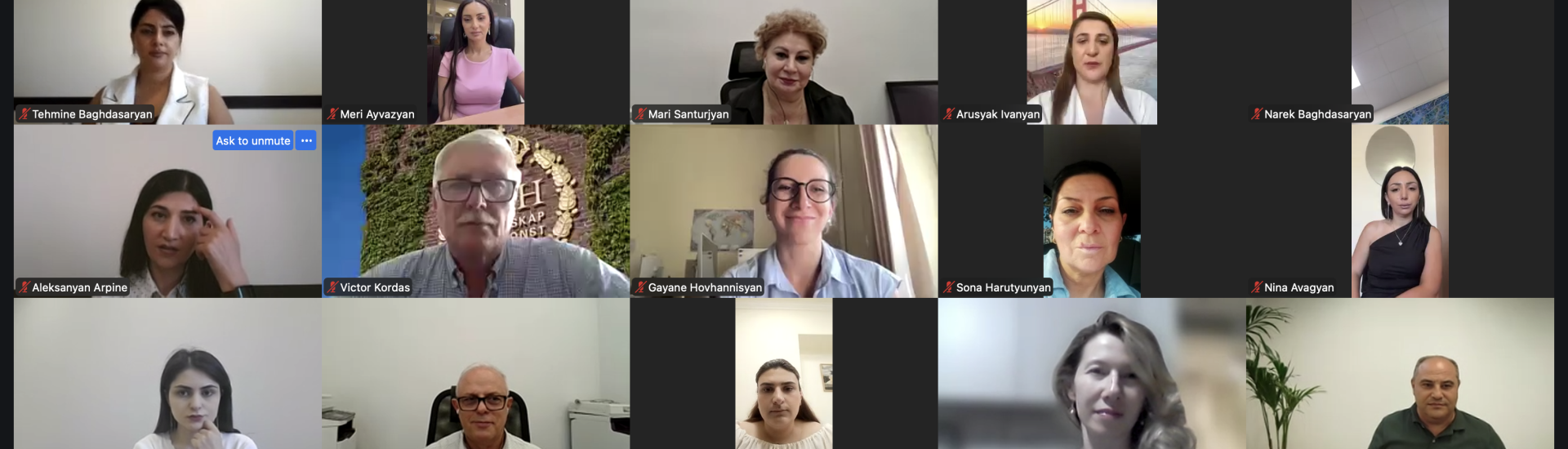
On September 24, 2026, within the framework of the eCAMPUS, ERASMUS+CBHE project “Fostering Socially Distanced and Inclusive On-Campus Education in Armenian Higher Education Institutions” and coordinated by the Institute for Informatics and Automation Problems of the National Academy of Sciences of Armenia, an online seminar entitled “e-Learning Platforms & Smart Classrooms: From European Practice to Benchmark Standards for Armenian HEIs” was held.
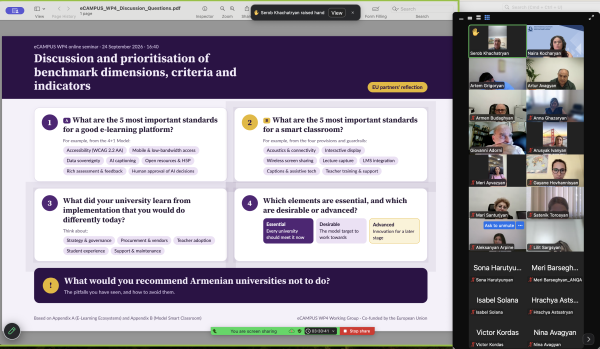
The meeting focused on the development of e-learning platforms and smart classrooms in Armenian higher education institutions, as well as on the establishment of common benchmarking standards for these areas. The aim of the event was to examine European experience in relation to the current needs of Armenian universities and to explore opportunities for the effective organization of technology-enhanced teaching, learning, and assessment. The seminar brought together representatives of Armenian higher education institutions and European partner universities. The agenda covered current trends in digital education, technological solutions, digital learning ecosystems, and approaches to creating future-oriented learning environments.
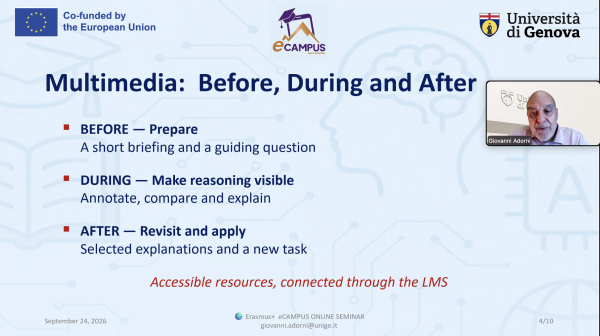
During the first part of the seminar, representatives of European partner universities presented the experience of their institutions, focusing on the e-learning platforms they use, the technical and educational infrastructure of their smart classrooms, as well as the needs and challenges that have emerged during their development. Under the theme “Digital Learning Ecosystems and Future-Oriented Learning Environments,” European partners presented different approaches to the interconnected use of digital tools and platforms, the digitalization of the teaching and learning process, and the development of modern educational environments.
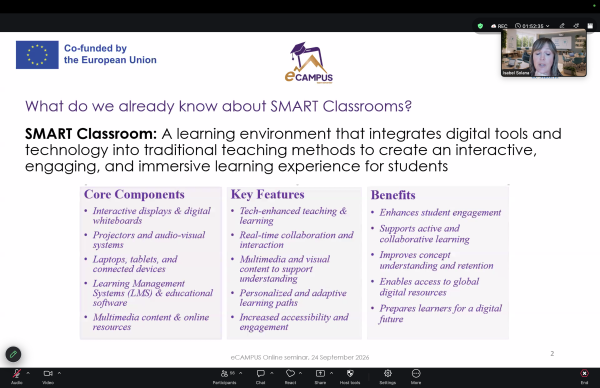
Particular attention was given to the topic “Smart Classrooms Beyond Technology: Multimedia, Assessment, Inclusivity and Artificial Intelligence.” It was emphasized that a modern smart classroom is not simply a space equipped with advanced technology. Rather, it should contribute to improving the effectiveness of teaching and learning, ensuring the inclusion of students with diverse educational needs, introducing modern assessment mechanisms, and enabling the effective and responsible use of artificial intelligence tools.
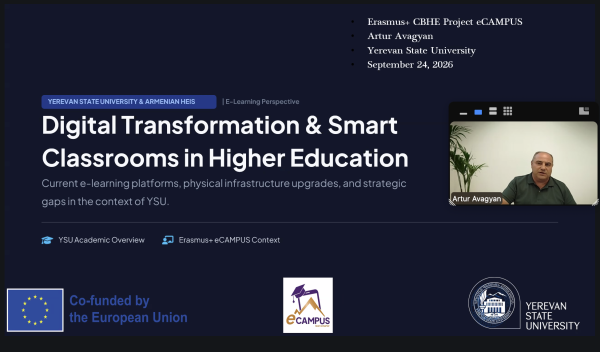
The subsequent part of the seminar focused on the experience, vision, existing e-learning platforms and smart classrooms of Armenian universities, as well as their current needs and gaps. Representatives of consortium member institutions presented the digital solutions implemented at their universities, the current capabilities of their e-learning platforms and smart classrooms, as well as existing challenges and areas for further development. A central question for Armenian universities was: “How can we move from individual digital tools to a unified and comprehensive learning ecosystem?” The experiences shared during the seminar demonstrated that the majority of Armenian universities already possess the necessary technical and professional capacities to organize digital education. At the same time, the further development of digital education requires not only the introduction of new technological solutions but also the effective integration and interconnected use of existing systems.
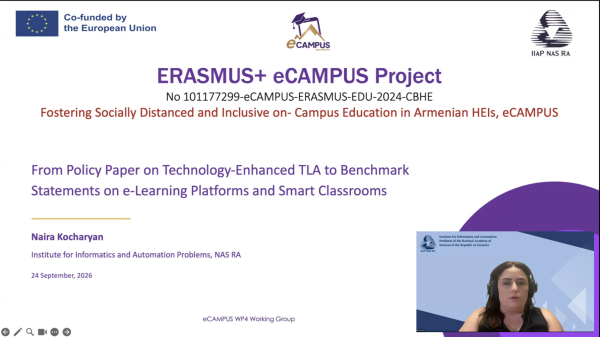
The components proposed for digital learning environments were presented at different levels, distinguishing between mandatory, desirable, and advanced requirements. This approach makes it possible to take into account differences among Armenian universities in terms of their technical capacities, levels of digital maturity, and existing infrastructure, while at the same time establishing clear and realistic directions for development. The standards being developed should focus not only on defining technical requirements but also on ensuring the quality of the educational process, accessibility, inclusiveness, effective assessment, and student-centered learning. Thus, technological infrastructure is viewed not as an end in itself, but as a tool for enhancing the quality and effectiveness of education.
At the conclusion of the seminar, Hrachya Astsatryan (IIAP NAS) presented the main outcomes of the meeting and the recommendations formulated, summarizing the issues raised and possible directions for further work. In his closing remarks, Armen Budaghyan, Coordinator of the eCAMPUS project, emphasized the importance of establishing a unified, sustainable, and quality-assured digital learning ecosystem within the Armenian higher education system.